By
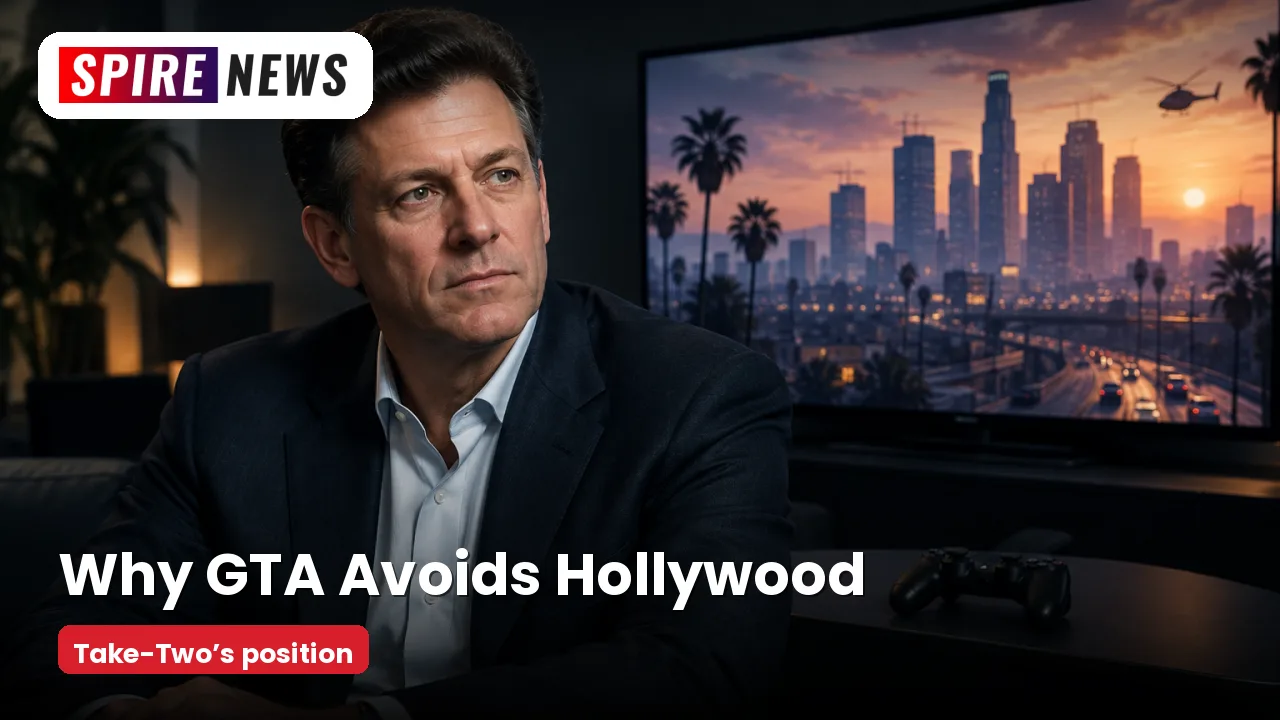
Grand Theft Auto has never been adapted for film or television, and Take-Two Interactive CEO Strauss Zelnick’s explanation comes down to more than a lack of interest in Hollywood: the company wants its creative teams to believe in an adaptation and is wary of outcomes it cannot control.
Take-Two has not ruled out adaptations of its intellectual property. In an interview on The David Rubenstein Show on November 12, 2026, Zelnick said the company would consider a film or TV project if its creative teams were passionate about it and believed it could engage and delight consumers.
Variety, which reported his comments, also spoke to sources who said Rockstar Games is more focused on expanding the Grand Theft Auto world through games than bringing it to Hollywood. Together, those accounts point to a high threshold for a screen adaptation, rather than a blanket prohibition.
That distinction matters to fans wondering whether the series could follow other games onto screens. Zelnick’s comments describe the conditions under which Take-Two might be interested; they do not amount to an announcement that a Grand Theft Auto film or series is on the way.
The creative and commercial case for caution
The first Grand Theft Auto game arrived in 1997. Since then, the series has become known for violent crime and mature-rated games. Its stories and settings offer material that could be translated to another medium, but a film or television series would also change how audiences experience the world: viewers would watch a story rather than play through it.
For Zelnick, the question is whether the people making the games see a creative reason to make that move. His standard is not simply that a recognizable name could attract an audience; he says the creative teams would need to believe the new project would be worthwhile for consumers.
He also sees a risk in giving up control over an adaptation’s result. “So we are selective for exactly the reason that you just cannot control these outcomes and we prefer to control our own destiny,” Zelnick said.
There is a financial consideration, too. In August 2024, Zelnick told Variety that Take-Two had selectively licensed its intellectual property, but that the value of such licences was typically not especially significant, even when an adaptation succeeded. That puts potential licensing income alongside the creative risks rather than making a screen deal an automatic priority.
The Rockstar sources’ account adds a more specific dimension to that company-wide approach. If the studio’s attention is on developing the world in games, an adaptation would have to compete with that existing creative focus. The CEO’s conditions leave room for one, but do not suggest that a recognizable franchise alone is enough to justify it.
What the Borderlands film shows
Zelnick has pointed to the Borderlands movie as an example of what can go wrong when game intellectual property is adapted. He described the film as disappointing, while also saying it benefited sales across the Borderlands game catalogue.
That is a mixed outcome rather than a simple warning against every adaptation. A film can disappoint on its own terms and still bring attention to the games behind it. For a company that wants its creative teams to be proud of an adaptation, however, an indirect sales benefit is a different measure from the quality of the screen project itself.
There is also an important timing distinction: the Borderlands film was developed and filmed before Take-Two acquired Gearbox, the studio behind the games. Its production therefore was not a project developed and filmed by Gearbox after it became part of Take-Two.
For Grand Theft Auto viewers hoping for a film or series, the practical takeaway is that the possibility remains open, but the decision would depend on more than the franchise’s suitability for the screen. Zelnick’s stated test combines enthusiasm from the creative teams, a reason for audiences to care and an acceptance of risks the company says it cannot fully control.